Social preview monitoring for content & web teams

Bring preview issues to the team in Slack.

Start with a scan, connect Slack from the report and complete monitoring setup. Give the people responsible for your campaign and product pages a shared place to follow up on preview issues.

Start with a free scan. No account or credit card. Then choose weekly follow-ups by email or Slack for up to 10 report pages.

Paste a page, a domain, or up to 10 URLs, one per line.

A clear place to start

See the issue. Find the page. Follow up.

  1. Check the sourceInspect titles, descriptions and images in the metadata your pages serve.
  2. Review the findingsOpen affected pages and use the issue details to decide what needs fixing.
  3. Check again after changesRun another scan after a fix, or set up recurring checks for the pages that matter.

Previews are based on fetched metadata. Slack, LinkedIn and X may show a different or cached card.

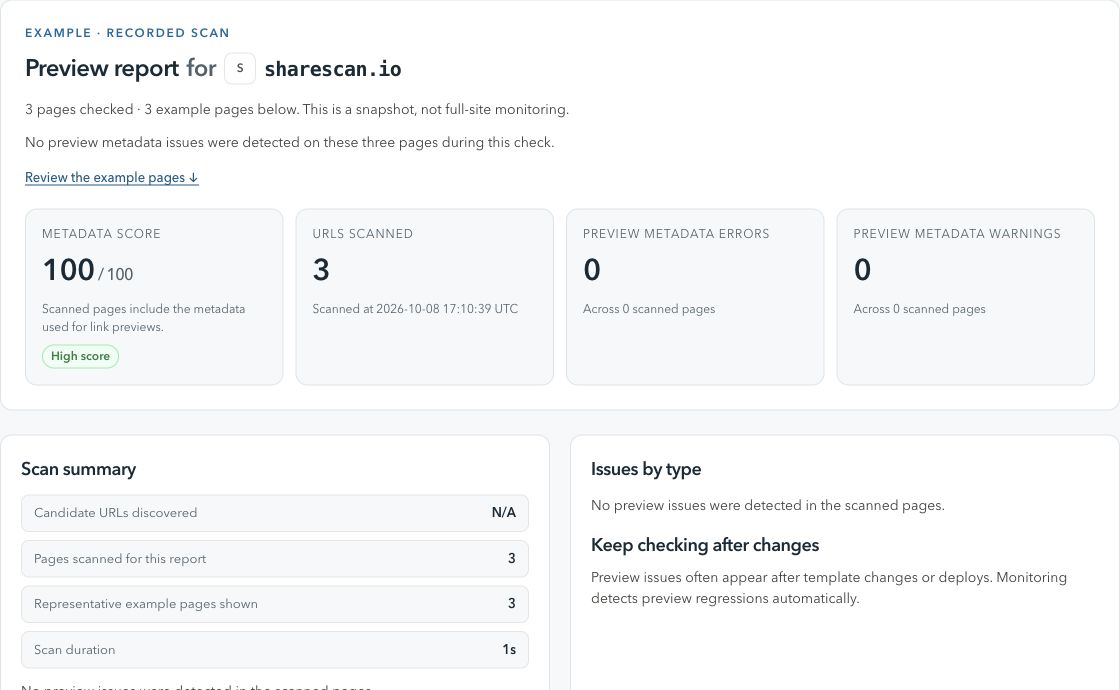
ShareScan / Preview reportActual product view
A ShareScan report showing a metadata score, checked pages and findings from a scan of sharescan.io.
A real scan of sharescan.io, captured 8 October 2026. A dated snapshot of three pages, not a live status.

From finding to fix

What to check and how to follow up.

Check 01

Why route preview alerts to Slack

Broken previews need fast ownership when launch links, campaign pages, and customer-facing URLs are already moving.

Why it happens

  • Marketing, content, and engineering teams often discover preview issues in different places.
  • Email-only follow-up can get separated from the channels where fixes happen.

What to do next

  • Connect Slack from the report to receive setup instructions.
  • Continue setup in Slack and choose what to monitor.
  • Route alerts to the channel where the owning team can respond.
Check 02

What Slack alerts are for

Preview alerts should focus on changes that can make shared links look broken, stale, or untrustworthy.

Why it happens

  • Preview images removed, replaced, blocked, or made too large.
  • Titles and descriptions changed by CMS or template updates.
  • Canonical, redirect, or HTTP response changes affecting crawlers.

What to do next

  • Use the scan report to understand current issues before setup.
  • Configure monitoring around high-value URLs and pages that change often.
  • Use Slack alerts as the handoff point for triage and fixes.
Check 03

What happens after Slack connects

A Slack connection is not the same as immediately activating full monitoring coverage.

Why it happens

  • Teams still need to choose monitored URLs and alert destinations.
  • Domain verification is required for workspace scan schedules and broader coverage.

What to do next

  • Check Slack for setup instructions after connecting.
  • Choose what to monitor and activate alerts from the Slack flow.
  • Return to the report when you need the point-in-time scan context.

When your team needs broader coverage

Bring recurring checks into your publishing workflow.

Create a workspace and verify your domain to schedule scans, manage URLs and connect CMS or GitHub Actions triggers. The Free workspace plan covers up to 100 pages.

Before you start

A few useful details.

Does clicking the Slack CTA activate monitoring immediately?

No. Slack connection sends setup instructions so you can continue configuring monitoring and choose what to monitor.

What alerts can Slack receive?

Slack alerts are for preview and metadata regressions such as missing images, changed Open Graph fields, Twitter Card issues, and crawler-facing response changes.

Can I use ShareScan without Slack?

Yes. You can run a free scan and choose weekly email follow-ups for up to 10 report pages. A verified workspace also supports scheduled scans without requiring Slack.

Where should alerts go?

Use the Slack channel where the people who own campaign pages, CMS content, or frontend metadata can act on issues.

Explore a related check

More ways to keep previews in view.