
May 22, 2026Category: Open GraphBy ShareScan
Open Graph vs Twitter Cards: what actually matters for previews
Open Graph and Twitter Card metadata overlap, but platforms do not read them equally. Here is what matters for reliable previews.
Research and analysis on social preview reliability, Open Graph metadata, and ecommerce template-level regressions.
This research series focuses on Open Graph metadata, social previews, and structural reliability across ecommerce sites.
Featured research
Open Graph and Twitter Card metadata overlap, but platforms do not read them equally. Here is what matters for reliable previews.

Metadata regressions are deploy regressions. This workflow catches broken Open Graph, canonical, and preview fields before they reach customers.

A practical guide to Open Graph image dimensions, file constraints, and cropping mistakes that make social previews unreliable.

Slack previews often break after CMS edits because the published URL, image asset, or Open Graph fields changed outside the deploy workflow.

The practical reasons LinkedIn drops preview images, and the checks that catch the problem before a campaign link goes live.
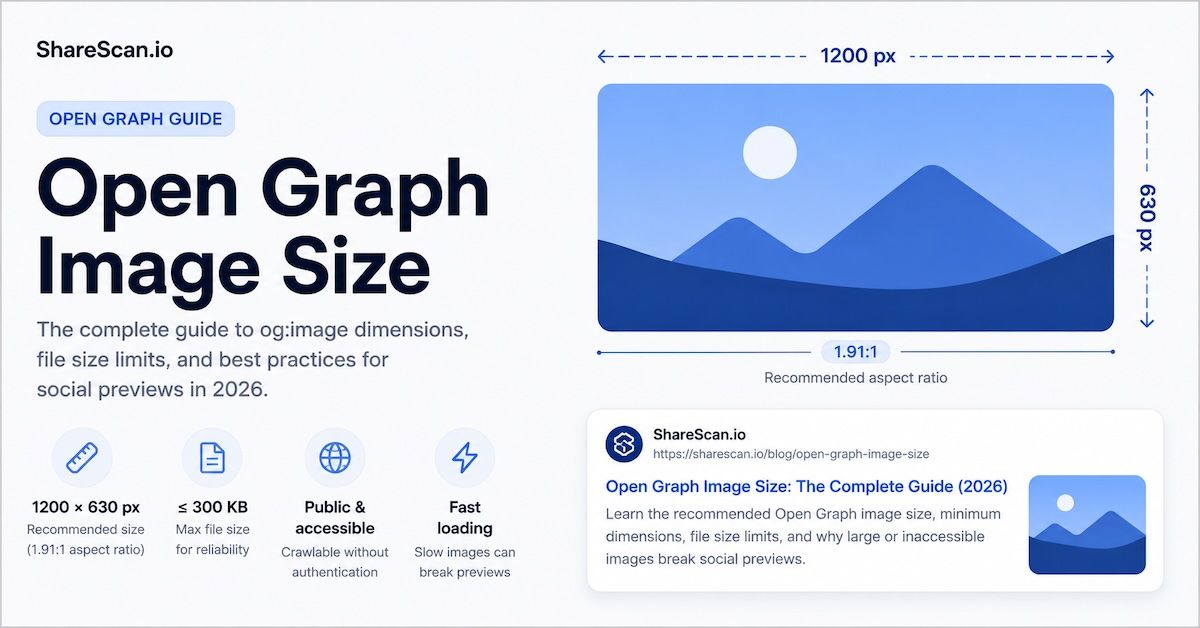
Learn the recommended Open Graph image size, minimum dimensions, file size limits, and why large or inaccessible images break social previews.

When you share a link on LinkedIn, Twitter, or Slack, a preview card appears — but only if the image behind it meets strict size and format requirements. Here's why large images are often the culprit when previews fail.
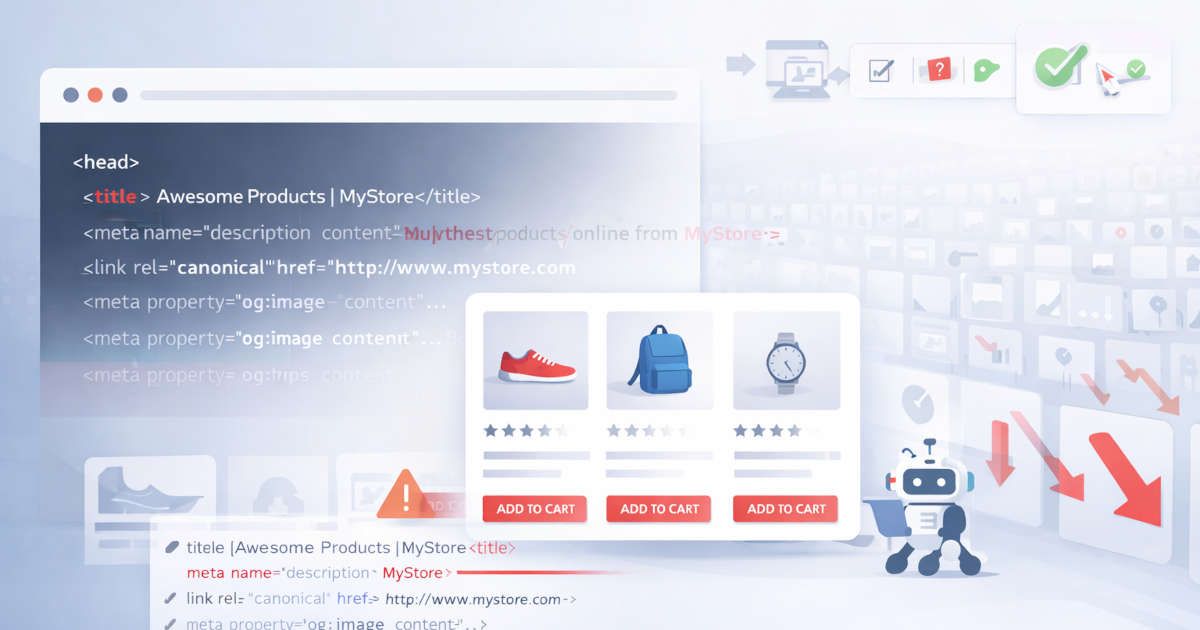
Metadata regressions are silent killers for ecommerce SEO. Learn how high-performing teams build monitoring workflows, automated checks, and clear ownership to catch issues before they cost rankings and revenue.
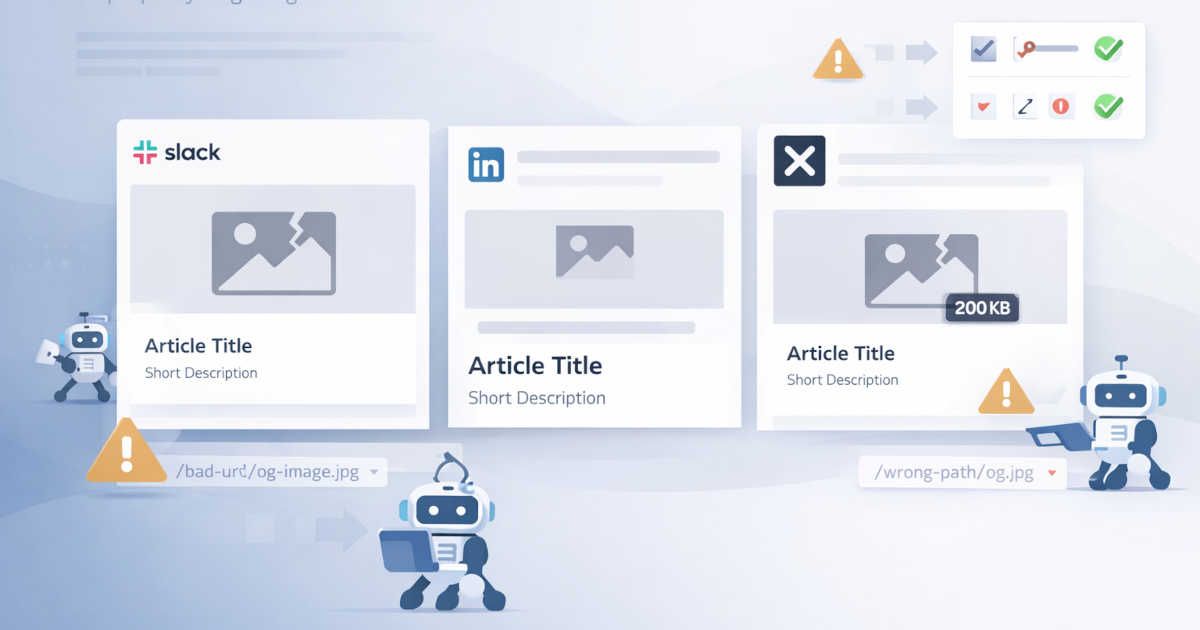
You've set the og:image tag. The URL looks right. But when someone shares your page on Slack, LinkedIn, or X — nothing shows up. Here are the most common reasons why, and how to fix each one.
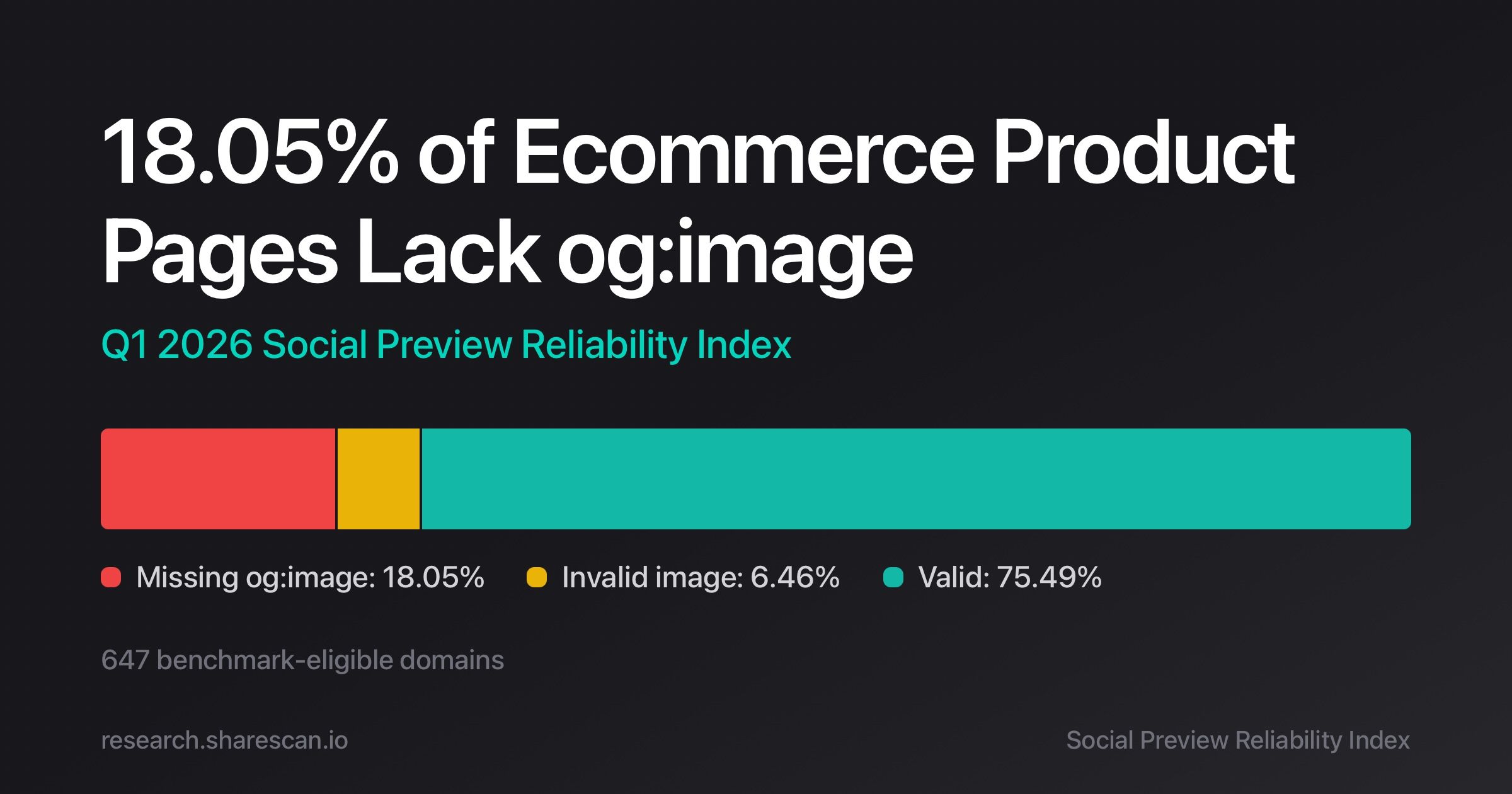
When a product link is shared on Slack, LinkedIn, or X, a missing og:image means no preview image — just a blank card that gets ignored. One in five ecommerce product pages has this problem right now.
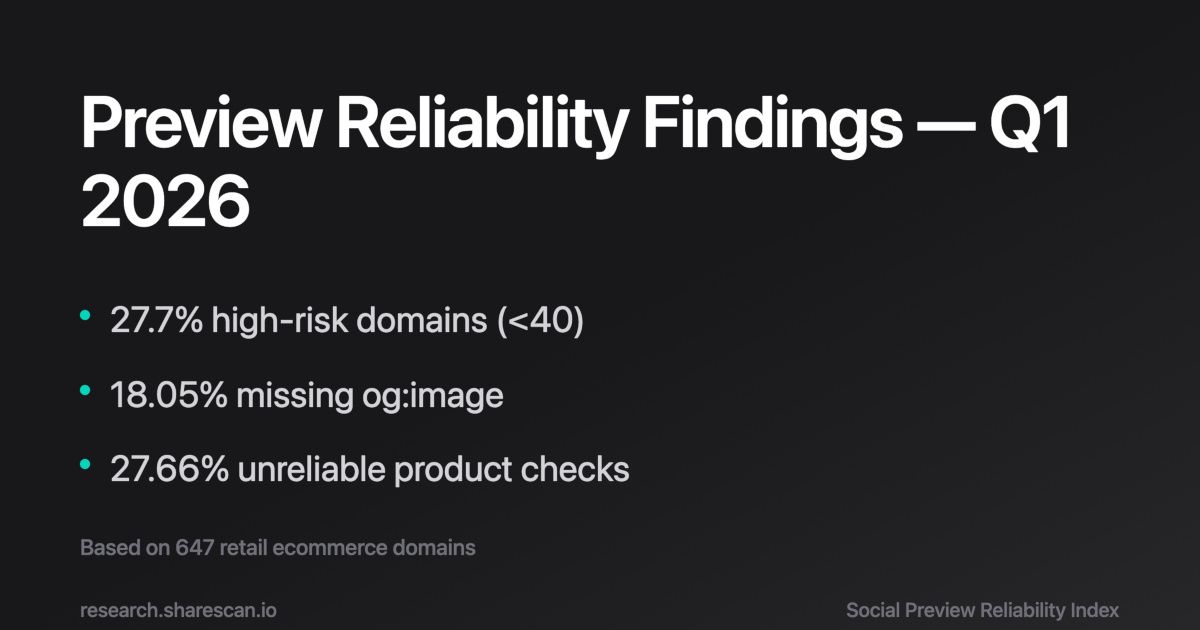
A new benchmark across 647 retail ecommerce domains shows that 27.7% exhibit structural preview risk and 18.05% of product pages lack an og:image tag.

You shipped the campaign. The tags are perfect. The traffic is ready. Then your product page gets shared — and the preview shows your homepage. The problem isn’t marketing. It’s rendering.
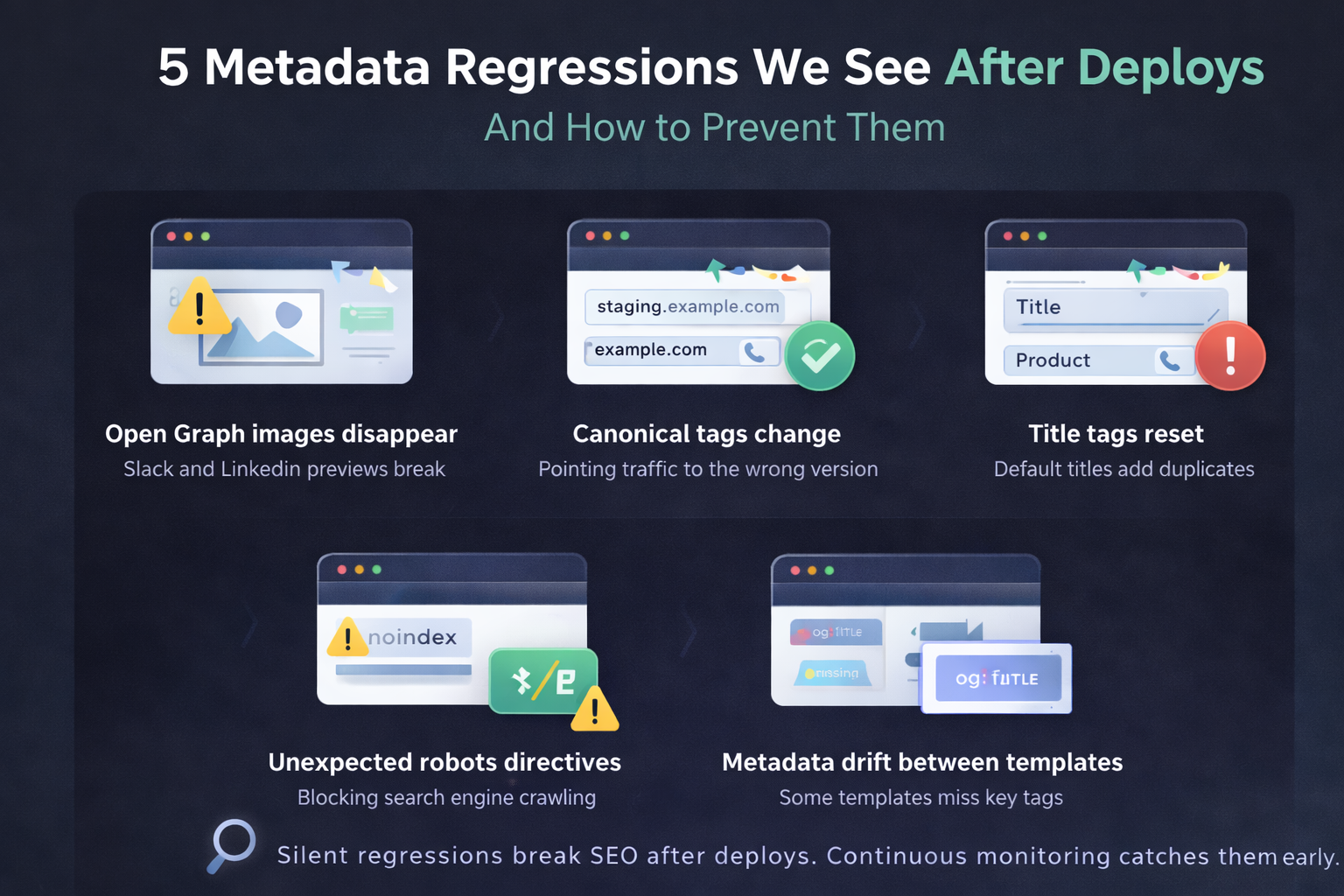
Metadata regressions don’t crash your site — they quietly reduce visibility, break social previews, and impact search performance after deploys. Here are five of the most common issues we see in production, and how to prevent them.
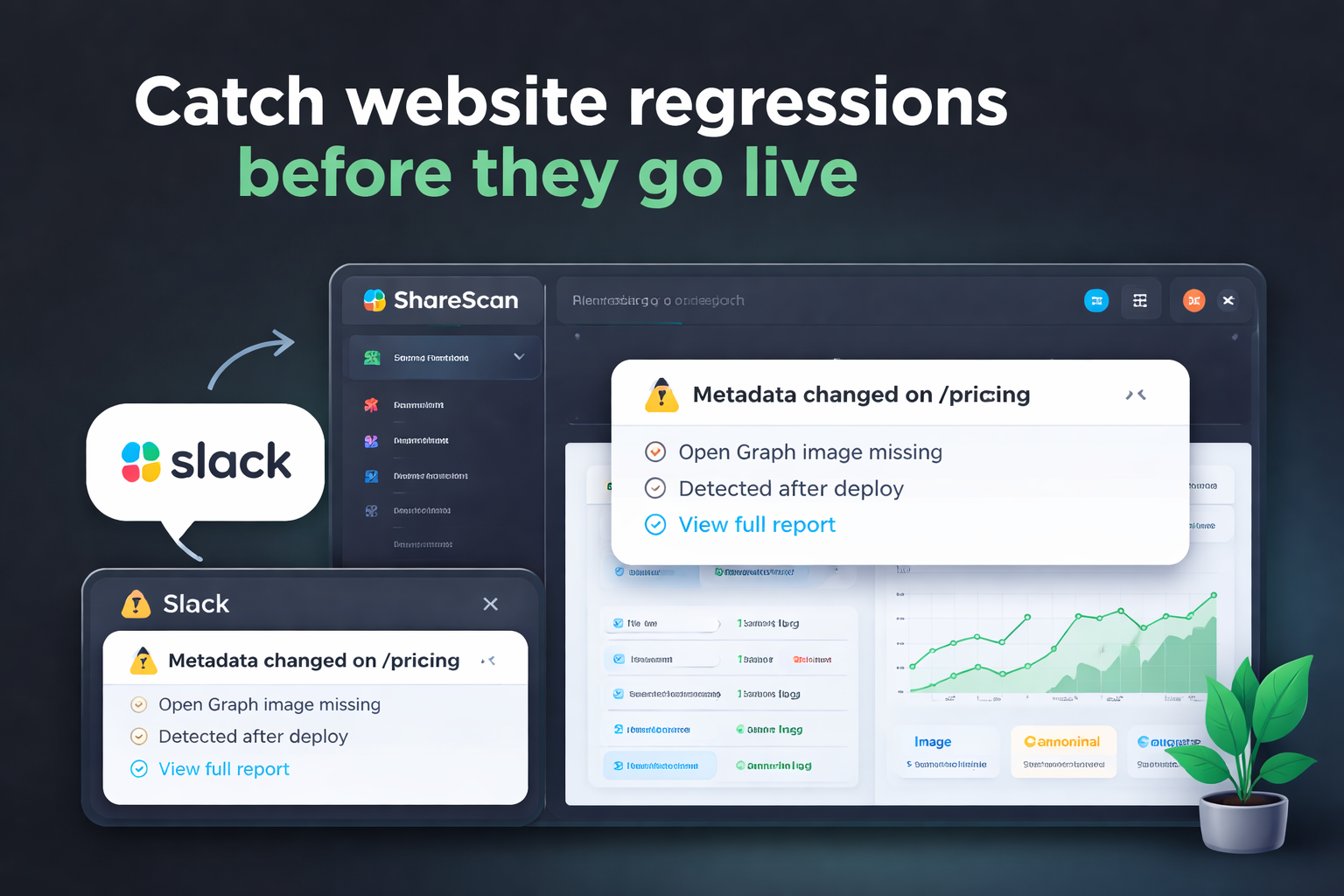
Websites rarely fail loudly — but metadata, Open Graph tags, and canonicals break more often than teams realize. ShareScan helps you catch these silent regressions after deploy, with continuous scans and real-time Slack alerts.